Blue and Black Dresses by Season
The same hex value can read completely differently depending on whether it’s lit by direct spring daylight, harsh summer sun, warm autumn string lights, or dim winter evening lighting. Each season below has its own shortlist of blues chosen for that season’s typical light, not a general shade ranking.
A black and blue dress that photographs well at a summer wedding can read completely differently under a winter reception’s warmer, dimmer lighting. Start with the season your event falls in, not a general favourite.
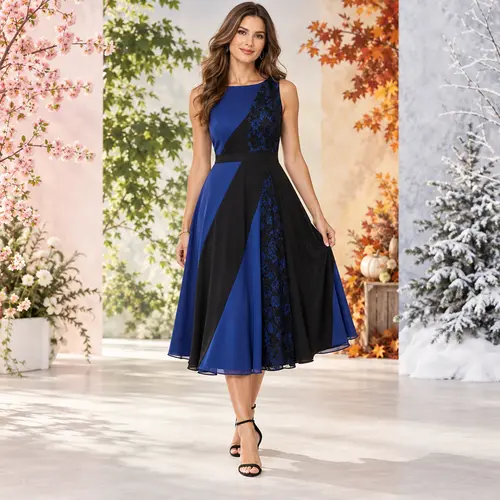
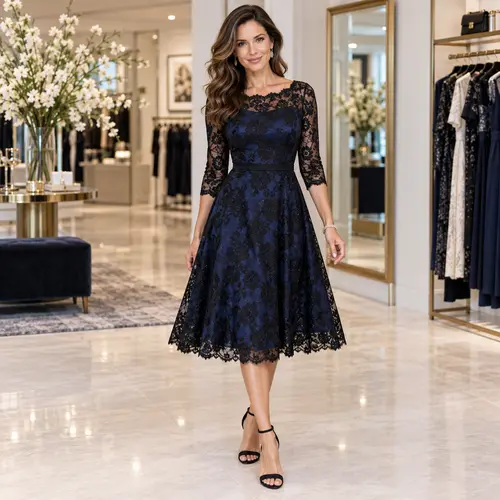
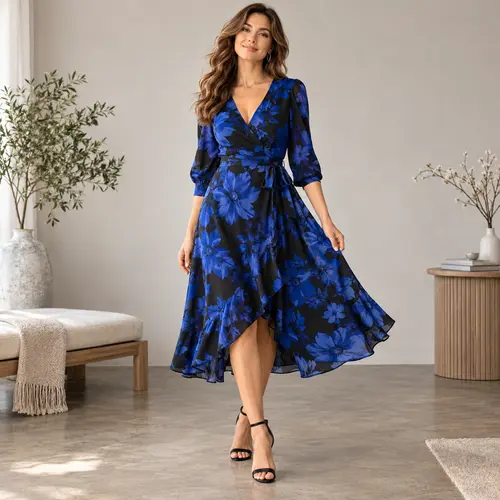
At a glance
- Spring: outdoor daylight favours lighter, higher undertone blues
- Summer: harsh midday sun favours high saturation shades that resist bleaching
- Autumn: warm indoor venue lighting favours richer, more muted blues
- Winter: dim indoor evening lighting favours the most saturated deep blues
One featured shade per season
| # | Shade | Why it works | Best for |
|---|---|---|---|
| 1 | Cornflower Blue | Cornflower Blue's warm undertone matches spring's daylight colour temperature more closely than a cool cast blue. | Spring |
| 2 | Cobalt Blue | Cobalt Blue's high saturation is what keeps it from bleaching out under direct midday sun the way lighter blues can. | Summer |
| 3 | Admiral Blue | Admiral Blue's muted depth matches the warmth of string light and candlelit venues rather than fighting it. | Autumn |
| 4 | Sapphire Blue | Sapphire Blue is the most saturated deep blue on this list, and the least likely of the group to be mistaken for black. | Winter |
Browse by season
Spring
Spring events lean outdoor and daylight lit: garden weddings, brunches, daytime showers. That favours lighter,…
Summer
Midday summer sun is harsher and more direct than spring's daylight, and it washes out lower saturation shades…
Autumn
Autumn events shift indoors earlier in the day and lean on warmer venue lighting than spring or summer: string…
Winter
Winter formal events are almost entirely indoor and evening lit, and they typically call for heavier fabric an…