True Black, Charcoal and Black Lace: Which Pairs With Which Blue
By Mariah Johnson · Updated
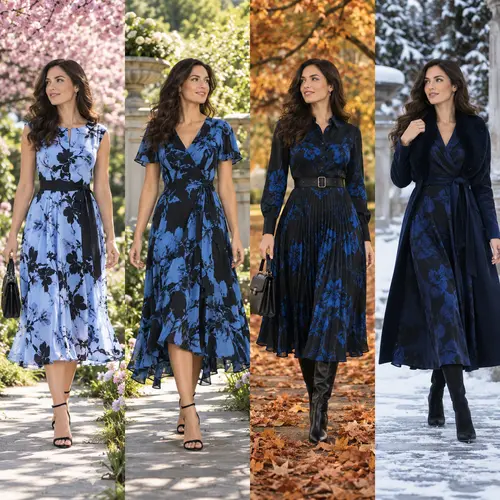
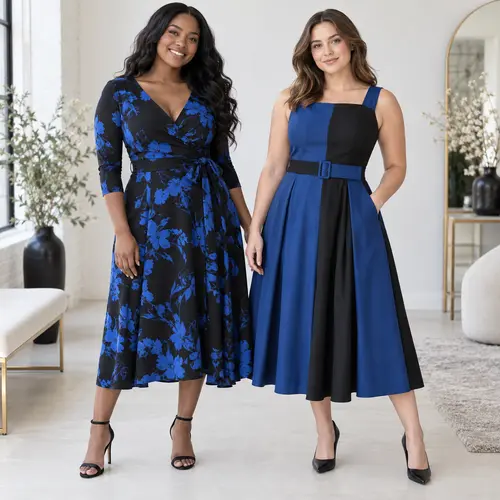
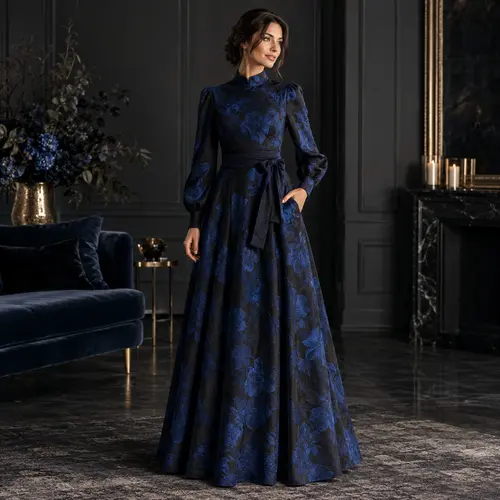
Not every black in a blue and black dress is the same black. True black, charcoal, and black lace each pair differently with a blue base, and picking the wrong one can make an otherwise well-chosen shade look flat or overpowering.
Whether you’re shopping for a black and blue dress or a blue and black dress, the specific black variant matters as much as the blue itself.
At a glance
- True black: the highest contrast, best with saturated jewel tones and bright blues
- Charcoal: softer contrast, best with muted, dusty, and deep navy blue-family blues
- Black lace: translucent, best with pastels and bridesmaid palettes, weight matters more than colour
Jump to a section
The Three Variants
| # | Variant | Description | Pairs best with | Note |
|---|---|---|---|---|
| 1 | True black | Pure, opaque black with no visible undertone. The highest-contrast option against any blue. | Saturated jewel tones and bright blues: royal blue, cobalt blue, sapphire blue | Reads as the most formal option. Can look heavy against a pastel. |
| 2 | Charcoal | A soft, dark grey with a faint warmth. Lower contrast than true black. | Muted and dusty blues: dusty blue, cadet blue, slate blue, and deep navy blue tones needing a softer edge | Prevents a navy blue-plus-black pairing from reading as flat and monochrome. |
| 3 | Black lace | An open or dense woven black fabric, translucent enough to let the base colour show through. | Pastels and midtones: periwinkle blue, powder blue, navy blue for a bridal look | Weight matters more than colour. See the lace-weight note in the periwinkle blue profile. |
FAQ
Is charcoal actually black?
Not technically, charcoal is a very dark grey rather than a true absence of colour, but it functions as a black variant in formalwear because the difference is subtle enough that most people read it as black at a glance. The practical difference shows up in contrast: charcoal against navy blue reads as two closely related dark tones, while true black against navy blue reads as a sharper break.
When should I choose charcoal over true black?
Choose charcoal when pairing with a muted or dusty shade (row 2 above), where true black's stark contrast can look harsher than the rest of the dress's soft, low-saturation register. Charcoal is also the better choice with a deep, low-luminance blue like navy blue or midnight blue, where true black risks making the whole garment read as one undifferentiated dark mass.
Does black lace work with dark blues?
It can, but with more risk than with a lighter blue. Over a deep shade like navy blue, black lace has less base colour to let through, so the pairing can read as plain black from a distance even with a light lace weight. See the navy blue shade profile's flash notes for the related luminance issue this compounds.
What black works best for a bridesmaid dress?
Black lace (row 3) is the most common choice for pastel bridesmaid dresses, since it adds texture and formality without the stark contrast of true black, which can look severe against a soft palette. Check the specific lace weight before ordering, a dense lace can still overwhelm a light pastel.
Does black lace ever look purple or blue itself under certain lighting?
Rarely, black lace generally stays neutral in colour regardless of lighting, unlike some deep blue shades that can shift in appearance depending on the light source.
Related guides
Mariah Johnson
Editor, Blue and Black Dress
I maintain the shade index and the placement pattern guides on this site, verifying each hex value against real garment photography as I work through the list, and I keep the pairing tables current.
View full bioGet the shade updates
One email when a hex value gets re-verified or a new shade profile goes up. No spam, unsubscribe anytime.