Which Blue Reads Best Against Warm, Cool and Neutral Skin
By Mariah Johnson · Updated
Most of the shades in this guide carry a cool undertone, but a smaller group leans warm or neutral, and matching a blue and black dress to your own skin undertone can make the same shade look noticeably more flattering or more flat.
Whether you’re shopping for a blue and black dress or a black and blue dress, undertone matching works the same way it does for any other colour: warm skin generally suits warm-cast shades, cool skin suits cool-cast shades, and neutral skin has the most flexibility.

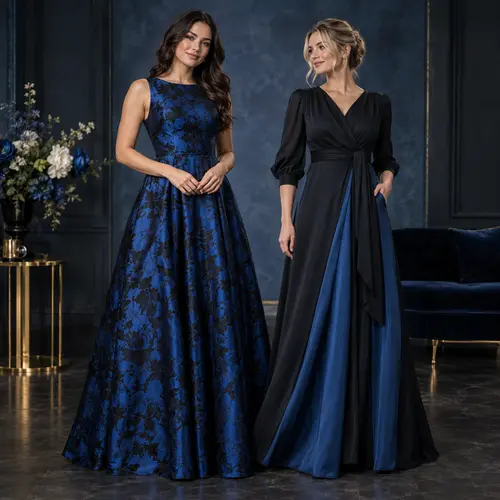
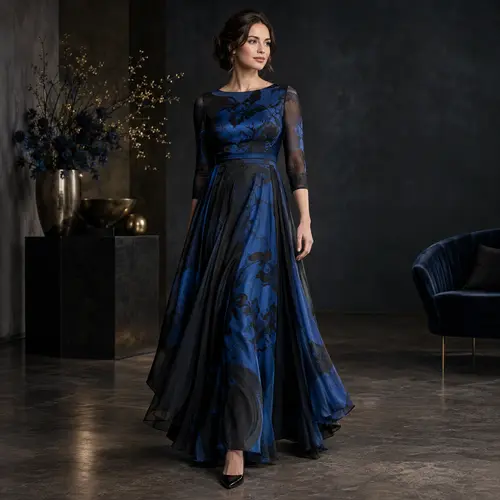
At a glance
- Warm undertone: 6 shades in this guide, including Cornflower Blue, Denim Blue, Space Cadet Blue
- Cool undertone: 38 shades, the majority of this guide's 50-shade taxonomy
- Neutral undertone: 6 shades, the most flexible starting point if you're unsure of your own undertone
Jump to a section
Warm Undertone
These shades carry a hint of warmth in their undertone, which keeps them from fighting a warm complexion the way a purely cool blue can.
Cool Undertone
Most of the 50 shades in this guide fall here. Cool-undertone blues generally suit cool complexions best, though a highly saturated cool shade can also work as a deliberate contrast on warm skin.
Neutral Undertone
These shades are formulated to avoid fighting either a warm or a cool complexion, which makes them the safest starting point if you’re unsure of your own undertone.
FAQ
How do I know if I have a warm, cool, or neutral undertone?
A common quick check is the vein test: veins on the inside of your wrist that look more green suggest a warm undertone, veins that look more blue or purple suggest cool, and a mix of both suggests neutral. This isn't a precise scientific method, but it's a reasonable starting point before trying shades on in person.
Can a cool-undertone shade still work on warm skin?
Yes. Undertone matching is a general guideline, not a strict rule, and a highly saturated cool blue like klein blue or neon blue can look striking on warm skin specifically because it reads as a deliberate contrast rather than an attempted match. See the flagship shade guide's FAQ on warm skin tones for more detail.
Does the black placement change based on skin tone?
Not directly, black placement is more about silhouette and formality than skin tone. What does change is how the overall pairing reads: a high-contrast black placement (a bodice or colour-block, per the placement patterns guide) draws more attention to the neckline and face than a low-contrast trim does, which matters more for framing your complexion than the blue's undertone alone.
What if I don't know my undertone?
Neutral-undertone shades (the third table above) are the safest starting point, since they're formulated to avoid fighting either a warm or cool complexion. Classic blue and cadet blue are two reliable neutral options that show up across several hub pages on this site.
Related guides
Mariah Johnson
Editor, Blue and Black Dress
I maintain the shade index and the placement pattern guides on this site, verifying each hex value against real garment photography as I work through the list, and I keep the pairing tables current.
View full bioGet the shade updates
One email when a hex value gets re-verified or a new shade profile goes up. No spam, unsubscribe anytime.