The Nine Ways Blue and Black Are Combined on a Dress
By Mariah Johnson · Updated
Every blue and black dress on this site uses one of nine placement patterns to combine the two colours. Knowing the pattern names makes it easier to search for exactly what you want, and to compare listings that use different words for the same idea.
Whether a listing calls it a black and blue dress or a blue and black dress, the placement pattern, not the word order, is what actually determines how the dress reads in person.
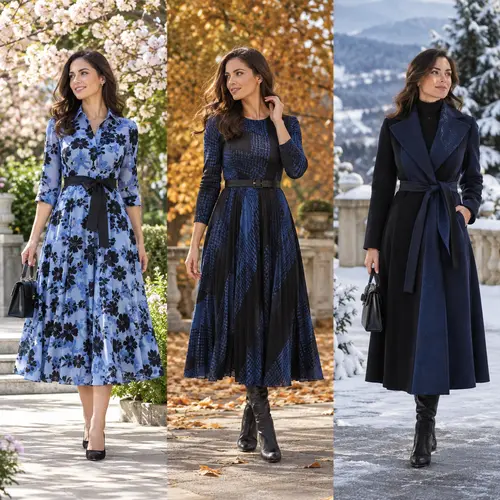
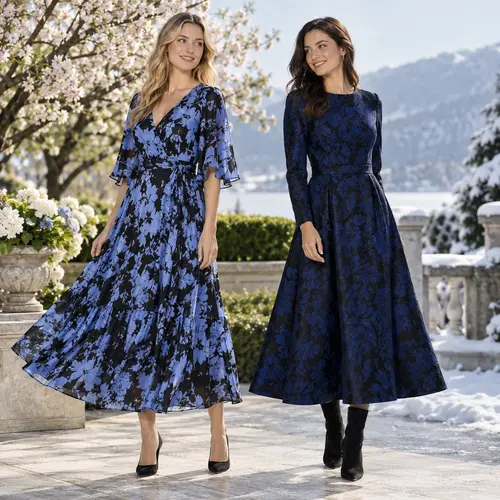
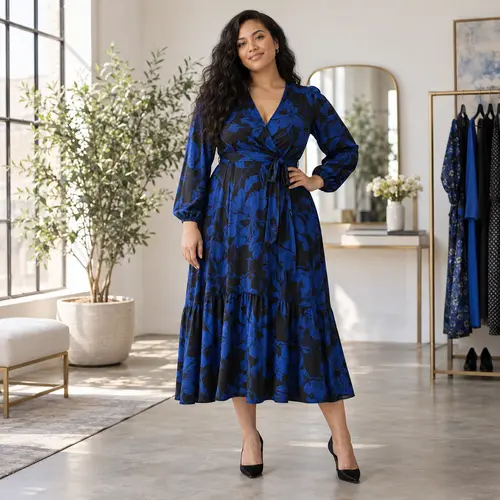
At a glance
- Highest contrast: bodice, skirt, and colour-block, best for formal and statement events
- Medium contrast: sleeves, panel, and ombre, useful for structure or conservative coverage
- Lowest contrast: trim, lace overlay, and belt, the most versatile everyday choices
Jump to a section
The Nine Patterns
| # | Pattern | Description | Contrast | Best for |
|---|---|---|---|---|
| 1 | Bodice | Solid black upper body, blue skirt below. | High | Ball gowns, prom, formal galas |
| 2 | Skirt | Solid black skirt, blue bodice above, the inverse of a black bodice. | High | Statement formal looks |
| 3 | Sleeves | Black sleeves only, sheer or solid, rest of the dress stays blue. | Medium | Conservative dress codes, cooler-weather events |
| 4 | Trim | Black edging at the hem, neckline, or cuffs. The lowest-contrast pattern in this guide. | Low | Everyday formalwear, the most versatile option |
| 5 | Panel | A structural black insert at the waist or side seam. | Medium | Fitted silhouettes, waist definition |
| 6 | Colour-block | A geometric division between blue and black, a diagonal or vertical block rather than a body-part boundary. | High | Editorial, modern-reading looks |
| 7 | Ombre | A gradient blend from blue into black rather than a hard edge. | Medium | Statement gowns, rare in mainstream formalwear |
| 8 | Lace overlay | Black lace layered over a blue base, letting the blue show through the weave. | Low to medium | Bridesmaid dresses, romantic and daytime looks |
| 9 | Belt or sash | A black belt or self-tie sash at the waist, the simplest pattern in this guide. | Low | Adding structure to an otherwise unstructured silhouette |
FAQ
What's the most common placement pattern?
Bodice (row 1) and trim (row 4) are the two most common patterns across the listings referenced throughout this site. Bodice gives the highest contrast and suits formal events, while trim is the lowest-risk, most versatile choice for everyday formalwear.
Which placement is most slimming?
A panel (row 5) placed at the waist or side seam is generally considered the most slimming, since it functions like the visual equivalent of a belt, narrowing the silhouette at a specific point rather than adding a large block of contrasting colour. A colour-block pattern (row 6) can achieve something similar if the block is placed vertically rather than horizontally.
Does colour-block read as more modern than trim?
Generally yes. Colour-block (row 6) uses a deliberate geometric division that reads as an editorial or contemporary design choice, while trim (row 4) is a more traditional, understated treatment. Neither is more correct, they suit different dress codes and personal style preferences.
What's the difference between a lace overlay and a panel?
A lace overlay (row 8) is translucent and lets the blue base show through the weave, so the pairing reads as a blend rather than a hard division. A panel (row 5) is opaque and creates a clear boundary between the blue and black sections. Overlay suits softer, romantic looks, while a panel suits structured, tailored ones.
Is ombre a good choice for a first-time blue and black dress buyer?
Probably not as a starting point. Ombre (row 7) is the rarest pattern in mainstream formalwear and the hardest to evaluate from a listing photo, since the gradient's exact transition point varies significantly between garments claiming the same description. A more common pattern like trim or a belt (rows 4 and 9) gives more predictable, easier-to-judge results.
Related guides
Mariah Johnson
Editor, Blue and Black Dress
I maintain the shade index and the placement pattern guides on this site, verifying each hex value against real garment photography as I work through the list, and I keep the pairing tables current.
View full bioGet the shade updates
One email when a hex value gets re-verified or a new shade profile goes up. No spam, unsubscribe anytime.