Avoiding a Clash With the Bridesmaid Palette
By Mariah Johnson · Updated
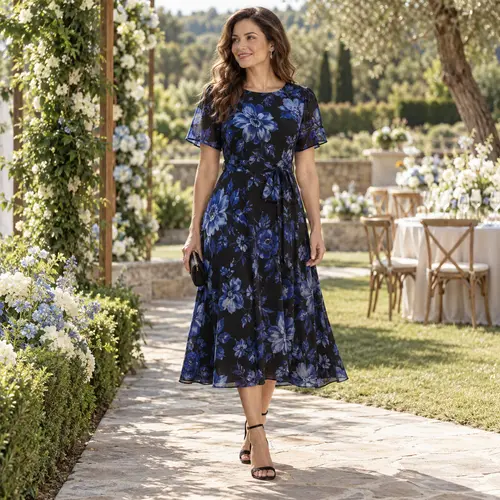
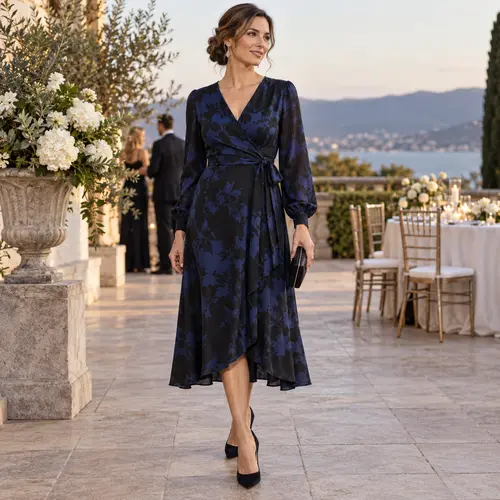
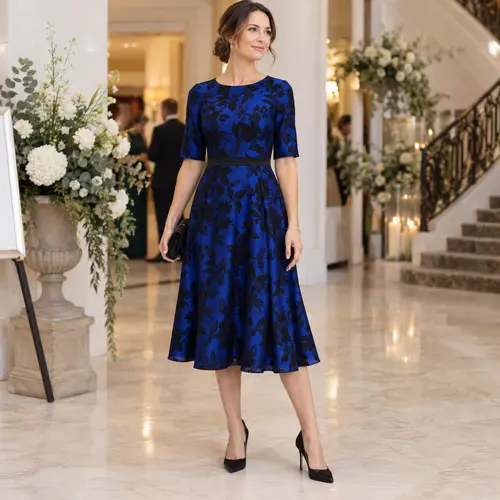
A blue and black wedding guest dress is safe by default, but the exact shade and how much black the dress carries can accidentally echo the bridesmaid palette if you’re not checking for it.
Whether the dress reads as black and blue or blue and black, the goal is the same: complement the wedding, don’t blend into the wedding party.
At a glance
- Bridesmaids in navy: pick royal blue or cobalt instead
- Bridesmaids in pastels: a muted shade blends in less conspicuously than a bold one
- Bridesmaids in black: choose a lighter placement pattern like trim over a full bodice split
- Unknown palette: default to a less common shade and a smaller black portion
Jump to a section
Palette by Palette
| # | Bridesmaid palette | Advice |
|---|---|---|
| 1 | Bridesmaids in navy | A guest in the exact same navy can visually blend into the bridal party from a distance. Choose a clearly brighter blue like royal blue or cobalt instead. |
| 2 | Bridesmaids in dusty blue or muted pastels | A guest in a bold, saturated blue stands out more than intended against a soft palette. A muted shade paired with charcoal rather than true black blends in less conspicuously. |
| 3 | Bridesmaids in black or charcoal | A guest in a heavy black-dominant placement pattern, a full bodice split, can read as competing with the wedding party's black. A trim or belt pattern (see the placement patterns guide) is the safer choice. |
| 4 | Unknown palette | Default to a placement pattern with a smaller black portion and a shade outside the most common wedding palettes, teal and periwinkle are both safer, less commonly used choices. |
FAQ
Is it actually rude to match the bridesmaids' colour?
It's more a matter of unintentionally drawing attention than an outright rule. A guest who happens to match the bridal party's exact shade can end up in wedding party photos by mistake or look like they're trying to coordinate with the wedding rather than simply attend it. It's a courtesy to avoid, not a hard rule.
How do I find out the bridesmaid colour before the wedding?
Check the wedding website if one exists, ask the couple directly, or ask a bridesmaid you know. If none of that's available, treating the palette as unknown and following the fourth row above is a reasonable fallback.
Does black-and-blue read as trying to upstage the bridal party?
Not inherently, a blue and black dress is common and expected wedding guest attire. The risk is specifically in matching the exact same shade and a similarly heavy black placement as the bridesmaids, not in wearing blue and black at all.
What's the safest choice with zero information about the palette?
A less commonly used blue, teal or periwinkle rather than navy or royal blue, paired with a low-contrast placement pattern like trim, minimises the odds of an accidental match with almost any wedding palette.
Does the venue or season change how much a clash actually matters?
Somewhat. A large wedding with many guests dilutes the visual impact of any one guest's shade choice, while a small, intimate wedding makes an accidental match more noticeable simply because there are fewer people and outfits to blend into.
Should I avoid the exact bridesmaid dress style too, not just the colour?
Style matters less than colour and overall formality level, since a guest's dress silhouette rarely gets compared directly to the bridesmaids' in the same way colour does. Focus on shade and black placement first, as covered in the table above, rather than worrying about the cut of the dress.
Related guides
Mariah Johnson
Editor, Blue and Black Dress
I maintain the shade index and the placement pattern guides on this site, verifying each hex value against real garment photography as I work through the list, and I keep the pairing tables current.
View full bioGet the shade updates
One email when a hex value gets re-verified or a new shade profile goes up. No spam, unsubscribe anytime.