Coordinating With the Mother of the Groom
By Mariah Johnson · Updated
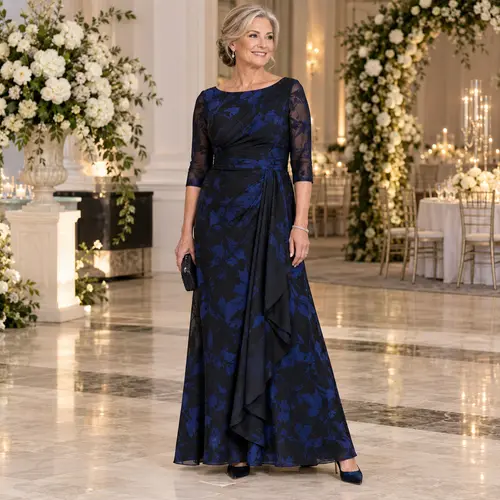
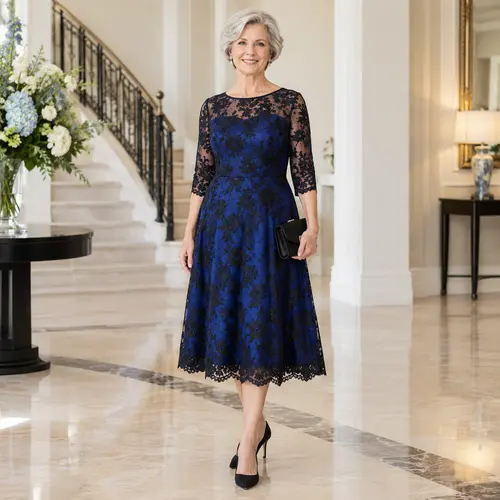
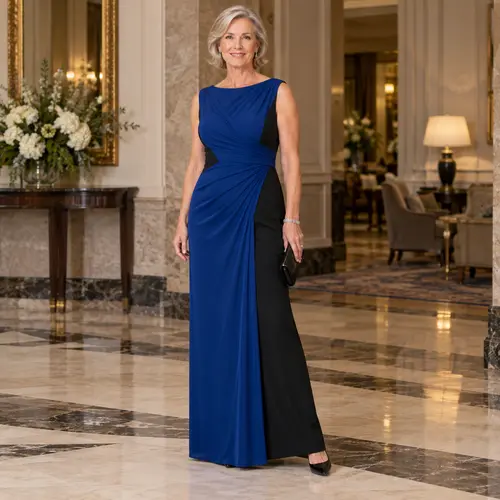
Two mothers in blue and black dresses can look deliberately coordinated without matching outfits, using a shared shade family, a complementary blue, or simply agreeing on the same black variant.
Whether each dress is styled as black and blue or blue and black, coordinating comes down to a handful of simple choices made ahead of the wedding.
At a glance
- Same shade family with different placement patterns keeps outfits coordinated, not identical
- Complementary shades (navy and cornflower, for example) read as coordinated without matching
- Agreeing on true black versus charcoal keeps both dresses at the same formality level
- Coordinating is a courtesy, not an obligation either mother owes the other
Jump to a section
Coordination Strategies
| # | Strategy | How it works |
|---|---|---|
| 1 | Same shade family, different placement pattern | Both mothers in blue and black, one in a bodice split and one in a trim pattern (see the placement patterns guide), coordinates without matching outfits outright. |
| 2 | Complementary shades | One mother in navy, the other in a warmer or lighter blue like cornflower, reads as coordinated without either dress being an exact copy of the other. |
| 3 | Shared black variant | Both mothers agree on true black versus charcoal ahead of time (see the blacks-that-aren't-black guide) so neither dress reads as more or less formal than the other. |
| 4 | No coordination attempted | Perfectly acceptable. Coordinating both mothers is a courtesy some families choose, not an expectation either side owes the other. |
FAQ
Is it required for both mothers to coordinate their dresses?
No, it's a common courtesy some families choose to extend, especially for formal portraits, but there's no obligation either mother owes the other to match or complement. Plenty of weddings have both mothers dress independently with no issue at all.
Who reaches out first to coordinate colours?
There's no fixed rule, but the mother of the bride often shares her colour choice first since bridal parties, including the mother of the bride's dress, are frequently finalised earlier in the planning process. Either side reaching out directly and early avoids a last-minute scramble.
What if the other mother won't share her dress colour?
It happens, and it isn't necessarily a snub, some people simply haven't decided yet or prefer to keep their outfit a surprise. Choosing a versatile, coordinating-friendly shade like navy or sapphire (see the shade and skin tone guide for versatile options) reduces the odds of an awkward clash either way.
Does the bride get final say over both mothers' dress colours?
Many brides do weigh in, especially on colours to avoid, such as anything too close to the bridesmaid palette (see the bridesmaid clash guide) or anything resembling a bridal white. Beyond avoiding a clash, the specific shade each mother wears is typically her own choice.
Should both mothers avoid wearing the exact same shade?
It's not a hard rule, but many families prefer each mother in a visibly distinct shade so photos read as two individuals rather than a matching set. If both mothers happen to love the same shade, a different placement pattern or silhouette still creates enough visual distinction.
Does the season or venue affect how the mothers should coordinate?
Yes, to the same degree it affects any other guest's shade choice. An outdoor spring or summer wedding favours lighter, higher-undertone blues for both mothers, per the seasonal shade shift guide, while a formal winter evening wedding suits deeper, more saturated jewel tones for both.
Does hair or accessory colour matter for coordination too?
Less so than the dress itself, though many families do coordinate flowers or corsages loosely with both mothers' dress shades for the formal photos.
Related guides
Mariah Johnson
Editor, Blue and Black Dress
I maintain the shade index and the placement pattern guides on this site, verifying each hex value against real garment photography as I work through the list, and I keep the pairing tables current.
View full bioGet the shade updates
One email when a hex value gets re-verified or a new shade profile goes up. No spam, unsubscribe anytime.